
Hairstyles for a Round Face That Create Better Balance
The goal is not to hide a round face. It is to choose lines, volume, and length that give the silhouette more direction while still matching your hair texture and daily routine.
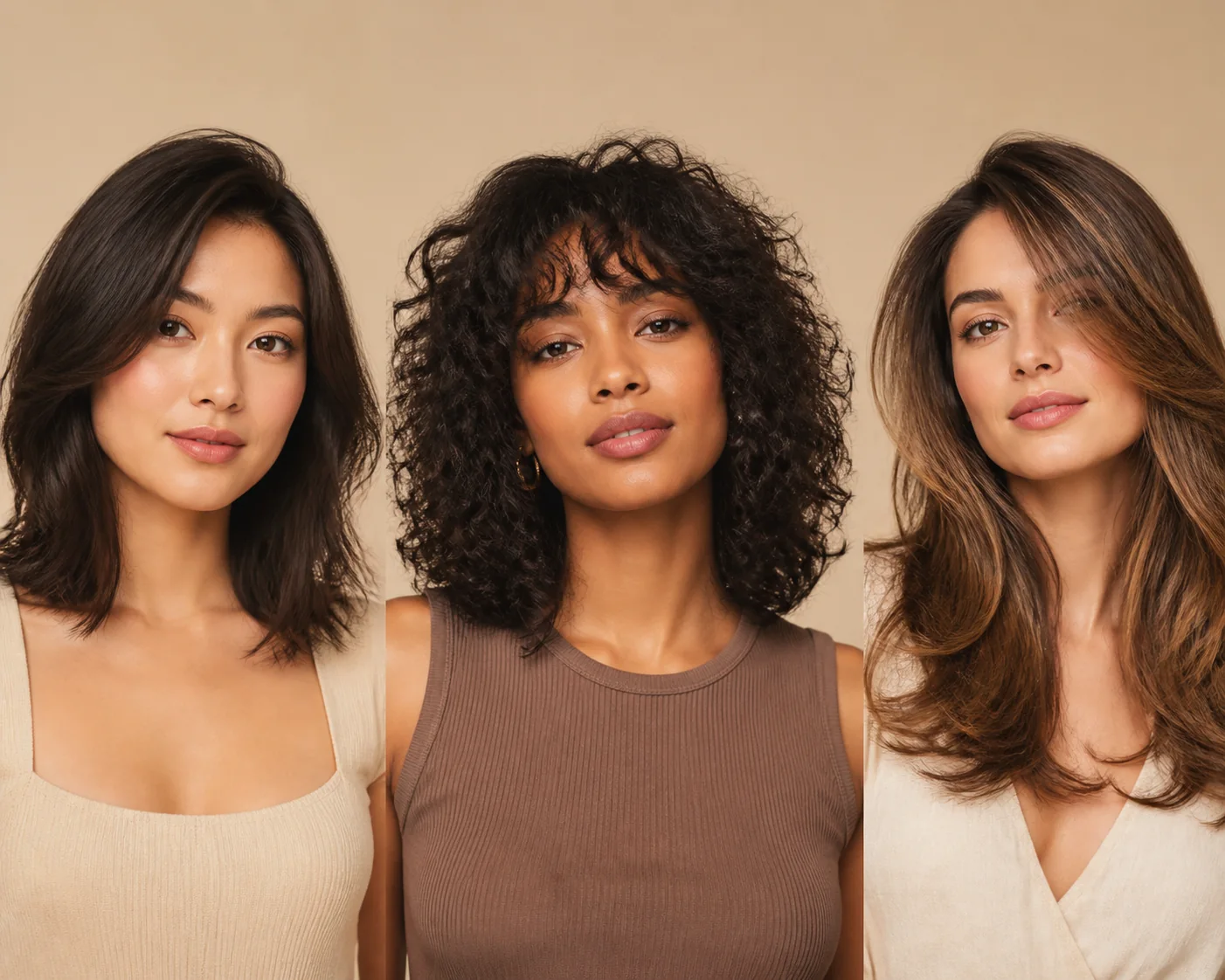
Quick answer: add direction, not a strict rule
When comparing hairstyles for a round face, look for a shape that adds direction around the face rather than simply making everything longer. Long layers, a collarbone lob, a side part, a soft curtain fringe, and controlled height at the crown can create a more elongated visual line. A textured bob or pixie can also work when the outline is intentional and the sides are not made wider than the cheek area.
The best haircut still depends on density, texture, hairline, shrinkage, and how much styling you will actually do. A style that looks balanced in a salon photo may need a different length or layer placement on fine straight hair, dense curls, or hair that air-dries with a lot of expansion.
Use this guide to shortlist two or three directions, then preview the same photo with different lengths. The preview is a reference for silhouette and movement, not a promise of the exact result a stylist can create.
How to recognize a round face
Face-shape labels are useful starting points, but measure the overall proportions instead of chasing a perfect category.
Width and length feel close
The cheek area may be the widest part of the face, while the visible length from forehead to chin feels similar to the width.
Cheeks create the main curve
The sides of the face often read as soft and rounded rather than sharply angled at the jaw or cheekbones.
Jawline has a gentle transition
The lower face may taper subtly, but it usually does not have the pointed chin of a heart shape or the strong corners of a square shape.
Best hairstyles for a round face by length
These are useful starting points. The strongest version is the one that also works with your density, texture, and maintenance tolerance.
| Style | Why it works | How to customize | Best if you want |
|---|---|---|---|
| Collarbone lob | The length moves past the cheek area and gives the silhouette a longer lower line without committing to very long hair. | Keep the ends connected and add long front layers instead of many short layers at the cheeks. | A versatile, medium-length change |
| Long face-framing layers | A connected cascade guides the eye down the sides of the face and keeps long hair from looking like one wide block. | Start the first visible layer below the cheekbone if you want less width near the center of the face. | Long hair and gradual movement |
| Soft layered bob | Light texture gives a shorter cut lift and direction without forcing a heavy, round perimeter. | Ask for a slightly longer front and avoid an edge that ends at the widest part of the cheeks. | A short cut with movement |
| Textured pixie | Height and controlled texture on top can create a vertical focal point while the sides stay close to the head. | Keep the top piecey rather than overly rounded and plan the grow-out shape before cutting. | Low-length styling with visible texture |
| Curtain fringe with layers | A center-opening fringe creates a vertical split and softens the transition into the cheek and jaw area. | Let the shortest pieces bend away from the face; avoid a dense straight line across the widest point. | Fringe without a full blunt bang |
| Side-swept fringe | The diagonal direction changes where the eye lands and can make a rounded outline feel less symmetrical. | Choose a longer, lighter sweep when your forehead is short or your hair is fine. | A side part and easy variation |
| Curly shoulder layers | A curl-friendly shape can add height and movement while preserving enough length to keep the silhouette from expanding only at the cheeks. | Account for shrinkage and place layers after the curl pattern is dry, not only by wet length. | Wavy, curly, or coily texture |
| Long side-parted waves | A side part and long bends create an off-center line that adds movement without requiring a severe cut. | Keep the wave direction soft and avoid building all the volume directly beside the cheekbones. | A conservative change or special-event styling |
The balancing principle: control width and build a longer line
When comparing round face haircuts, judge the placement of the widest point rather than trusting the name of the style alone.
- Move the eye vertically. Length, a side part, curtain fringe, and gentle crown lift can create a visual path that travels up and down instead of stopping at the cheeks.
- Keep cheek-level volume intentional. Volume is not automatically wrong, but a wide, blunt shape exactly at the cheekbones can make the face and haircut repeat the same curve.
- Use connected ends. A lob, long layer, or curl shape often looks more balanced when the ends keep enough weight to support the lower half of the silhouette.
- Treat the label as a starting point. Round, oval, heart, and square categories overlap. Your hairline, texture, glasses, and preferred styling direction matter more than a rigid avoid list.
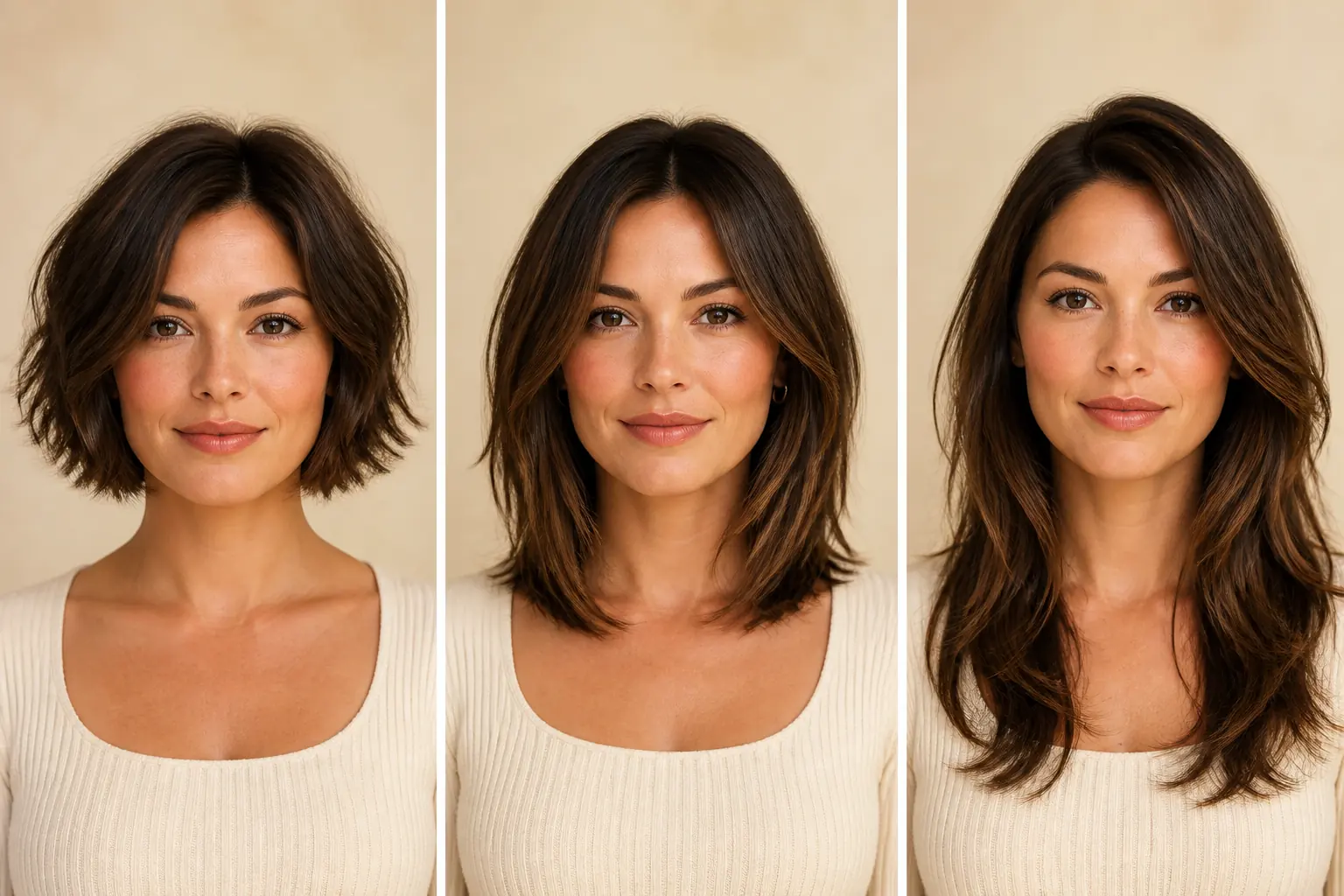
Fringe, parting, and styling tips that change the silhouette
Small placement choices can matter more than adding a complicated product routine.
- Choose your part deliberately. A side part creates a diagonal line; a center part with curtain fringe creates an opening that can lengthen the visual center of the face.
- Place volume above or below the cheek. If you want more lift, build it at the crown or through the lower lengths instead of making the cheek area the widest point.
- Bend face-framing pieces away. A soft outward bend around the cheek and jaw creates movement. The goal is a gradual frame, not a shelf that stops at the cheekbone.
- Preview the dry finish. Straight, wavy, and curly hair can shrink or expand in different directions. Compare the texture you can realistically maintain rather than a one-time salon finish.
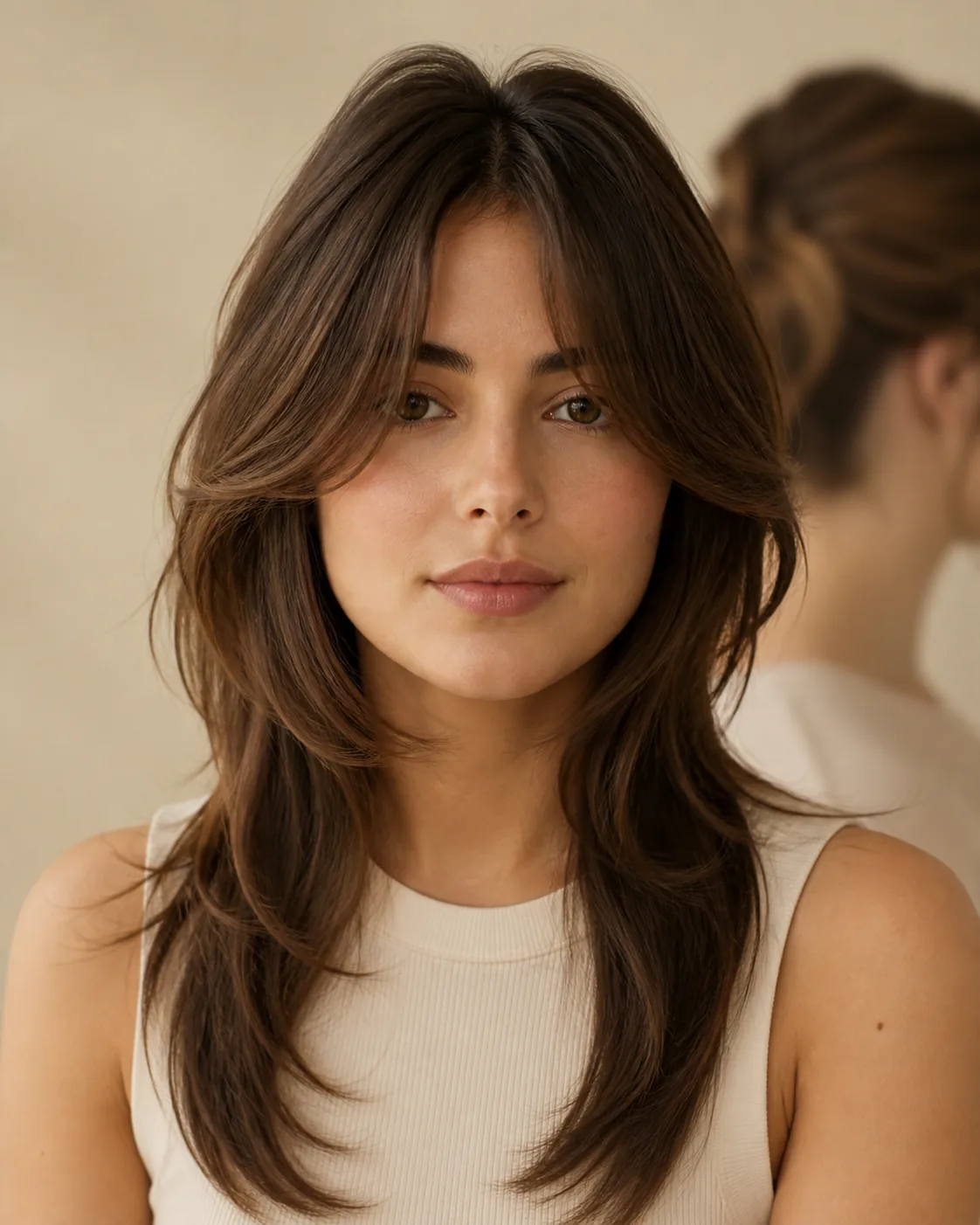
What to adjust when a style feels too wide
A blunt line at cheek level
If the bob ends exactly at the widest part of the face, ask whether moving the edge slightly below or adding light texture would create a better transition.
Short layers that stop at the cheeks
A layer can add movement, but a short shelf at the cheekbones may create width where you wanted a longer line. Move the first layer lower when needed.
A heavy straight fringe
A dense horizontal bang can make the upper face appear shorter. Consider curtain, wispy, or side-swept fringe if you want framing with more openness.
Copying a reference without translating it
Bring the picture, then add your density, texture, hairline, part, glasses, and styling time. The same named haircut may need a different perimeter on your hair.
Choose the version by your hair and routine
The best haircut for a round face is the version you can wear consistently, not only the version that photographs well once.
Fine or lower-density hair
Keep the perimeter connected and use restrained layers. A lob, compact bob, or side-swept shape can preserve visual fullness.
Straight hair
Use the clean line to your advantage with a collarbone length, long front pieces, or a soft side part. Watch for a blunt edge that repeats cheek width.
Wavy or curly hair
Plan around shrinkage and expansion. A curl-friendly layer pattern can add height while protecting the lower outline and natural pattern.
Low-maintenance routine
Choose a shape that still looks intentional air-dried. Grown-out curtain fringe, a textured lob, or long connected layers may be easier than precise blunt bangs.
Preview your shortlist before the appointment
A hairstyle preview is most useful when it answers one question at a time: Does a lob create enough length? Does the fringe open the center? Does the bob keep the cheek area from becoming too wide? Compare the same front-facing photo so the haircut, rather than lighting or pose, is the main variable.
Save two or three references and tell your stylist what you want to preserve as well as what you want to change. An AI preview cannot measure cowlicks, density, curl shrinkage, or the exact way a haircut will grow out, so use it as a conversation starter rather than a guarantee.
- Use a clear, front-facing photo with your natural hairline visible.
- Compare a conservative lob, a shorter textured option, and one longer layered option.
- Check the silhouette at the forehead, cheekbones, jaw, and shoulders instead of judging only the face.
- Show the strongest two references and explain your styling time, texture, and maintenance limits.
Hairstyles for Round Face FAQ
Practical answers for choosing length, layers, bangs, and a realistic salon reference.
What are the best hairstyles for a round face?
There is no single best cut, but collarbone lobs, long face-framing layers, soft layered bobs, textured pixies, curtain fringe, and side-swept shapes are useful starting points because they can create direction and keep the lower outline connected.
Is short hair good for a round face?
Yes. A textured pixie, longer-front bob, or short layered cut can work well when the sides do not become the widest point and the top or fringe gives the shape direction. Preview the grow-out plan as well as the first-day styling.
Do bangs suit a round face?
They can. Curtain, wispy, and side-swept bangs often leave more openness than a heavy blunt fringe. The best length depends on your forehead, hairline, density, and whether you will style the fringe regularly.
Does long hair make a round face look slimmer?
Longer hair can create a longer visual line, but length alone does not guarantee balance. Connected layers, a part that suits your hairline, and controlled cheek-level volume usually matter more than simply growing hair longer.
What haircut works for a round face with fine hair?
A compact bob, collarbone lob, or restrained long-layer shape can preserve visual density. Avoid excessive thinning and many short layers that remove weight; use the thin-hair guide for density-specific options.
What haircut works for a round face with curly hair?
Curly hair can look balanced with a shaped shoulder cut, long layers, or controlled height that respects shrinkage. Ask for the shape to be planned around the dry curl pattern and connect the lower outline so the cheeks do not carry all the width.
Build a Round-Face Haircut Shortlist
Compare bobs, lobs, layers, fringe, and longer shapes before you book the appointment.
Preview My Hairstyle OptionsThis guide covers hairstyles for round face, best hairstyles for round faces, haircuts for round faces, round face haircuts, and the best haircut for round face by length, texture, fringe, and maintenance routine.